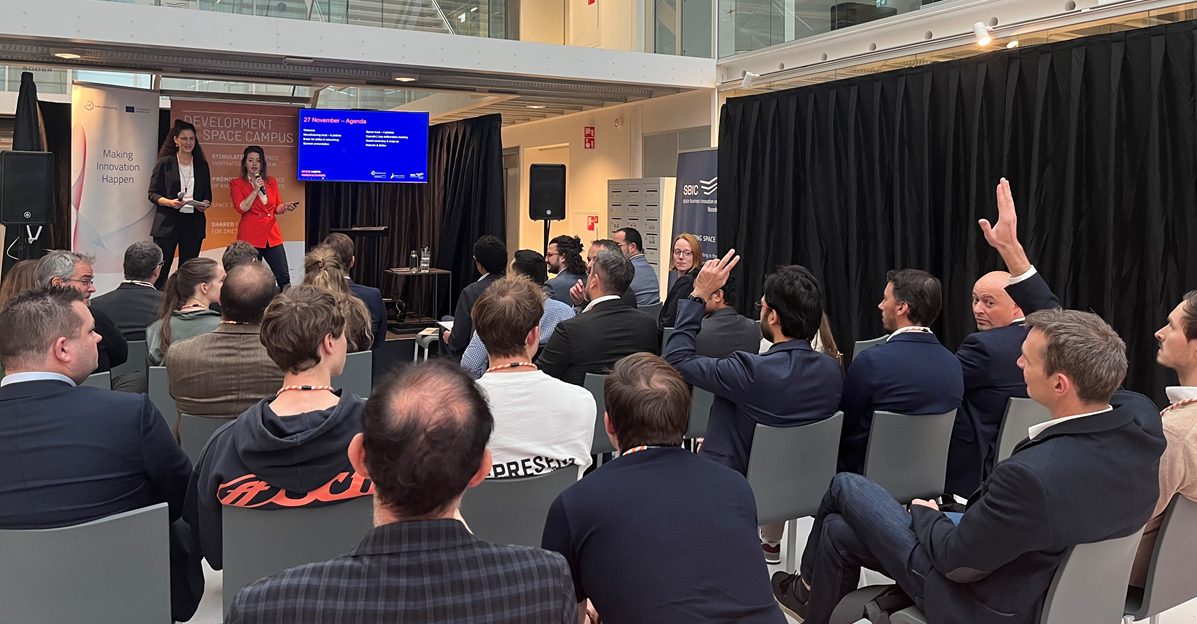
The principle behind the Space Meets Manufacturing startup competition is simple but powerful: industry players present real challenges and startups propose innovative solutions. Whether it’s applying space technologies on the factory floor or adapting manufacturing processes for use in orbit, every solution creates cross-sectoral value. The inaugural edition of this competition – organised by EIT Manufacturing, NL Space Campus and SBIC Noordwijk – reached its conclusion at the final on 27 Nov. The jury assessed the solutions of the finalists’ during the pitch sessions and two winners, one for each of the space and manufacturing tracks, were announced. Discover more below.
This is an edited post based on the news release by EIT Manufacturing

The 2025 edition of the competition featured five industry challenges from the European Space Agency (ESA), ArcelorMittal and Technoport in collaboration with the European Space Resources Innovation Centre (ESRIC). These challenges addressed the need for a predictive tool for weldability, multi-purpose structural optimisation, non-destructive inspection methods, and serial production technologies for hardware and space electronics, as well as bridging terrestrial technologies to space applications.
When the mission-critical capabilities of space innovators with the engineering excellence of manufacturing are connected, solutions are created that neither sector could achieve alone. “By linking our ecosystems, we build a pipeline of technologies that strengthen Europe’s competitiveness in both space and manufacturing,” commented Silvia Grätz, EIT Manufacturing’s senior manager business development and innovation.
After opening the final from the stage, NL Space Campus community manager Maaike Smelte said: “Through this competition, we are not only shining a spotlight on innovative startups – we are building bridges. Bridges between sectors, between technology and industry, between innovation and implementation.”
Connections, partnerships and mentorships
The strength of the initiative lies in its triple impact: it connects challenge owners with solution providers; sparks new partnerships; and provides dedicated mentoring throughout the competition. Together, these elements give startups industry access and help companies explore cutting-edge solutions.
Ten of shortlisted startups presented their solution proposals to the jury at the competition final that took place at SBIC Noordwijk. Following selection, the finalists received mentoring to craft their ideas in preparation for the pitch session. The companies on stage at the final included: ESOS Wind, GeDy TrAss, IndustryApps, Novo AI, Resoniks, Sightwise, Spaider Space, Tumi Robotics, Uncharted AI and Warden Machinery.
Whether improving quality control on Earth or enabling autonomy in orbit, the teams demonstrated how breakthrough technologies can strengthen both manufacturing and space operations space operations
New industry solutions taking off
The finalists’ proposals for solutions to the different challenges spanned the full spectrum of industrial innovation – artificial intelligence (AI) platforms that power smarter factories, robotics capable of exploring harsh or confined environments, advanced sensors for monitoring materials and structures, synthetic-data tools that accelerate machine vision and mission-ready AI systems designed for space. Whether improving quality control on Earth or enabling autonomy in orbit, these teams demonstrated how breakthrough technologies can strengthen both manufacturing and space operations.
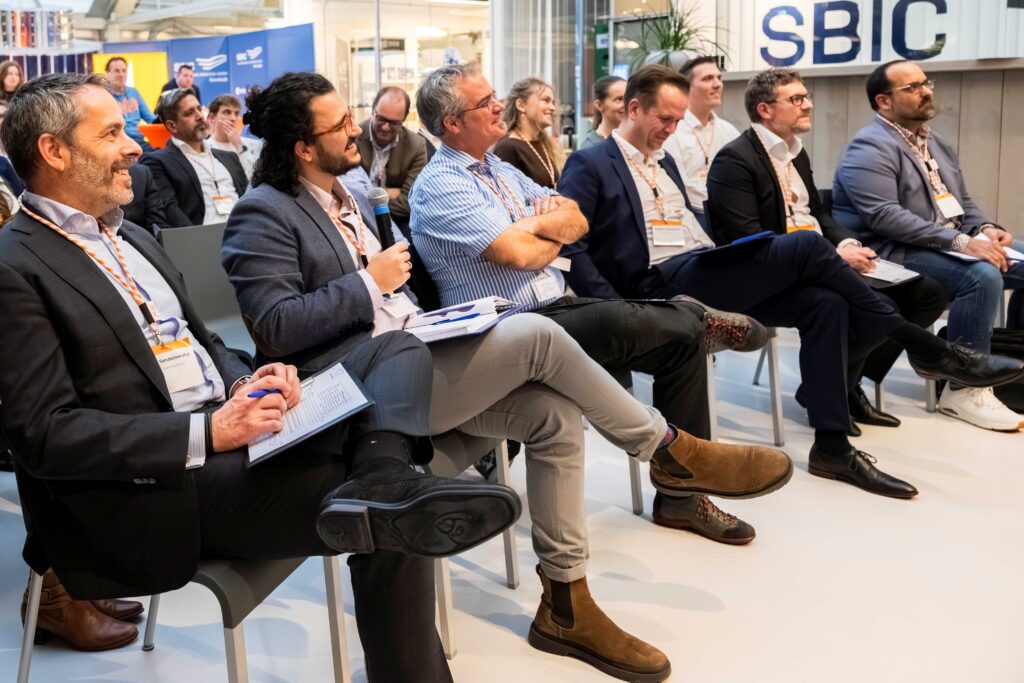
The jury included Robert Ermisch (EIT Manufacturing), Marc Sandelkowsky (NL Space Campus), Jacobo Domingo Gil (SBIC Noordwijk), Andreas Tesch (ESA), Lari Cujko (ESRIC) and Arnau Castillo Gonzalez (Collins Aerospace). Following the pitches, all members of the jury retreated to a room for deliberation and discussion.
“Choosing a winner was hard because there were many excellent technical solutions, each addressing a slightly different requirement aspect,” commented Robert Ermisch, EIT Manufacturing’s business development and innovation manager. “However, all of them impressed with their degree of innovation, applicability and clear paths to rapid deployment in space and manufacturing processes.”
In the end, two solutions stood out and could be seen to have potential as the basis for establishing cross-industry pilot projects.
Space and manufacturing track winners
The solution proposals that came out top were from the companies Sightwise (in the space track) and Uncharted AI (in the manufacturing track). The winners and their solutions bridge space and manufacturing and connect these two ecosystems with innovative ideas. Each winning company was presented with a unique trophy and prizes. In addition, industry partners are already exploring potential proof-of-concept collaborations and further applications of the technologies with the finalists.
SPACE TRACK
Winner: Sightwise (sightwise.ai)
Solution: Proposed for challenge #3 (from ESA)
About: The company is developing a synthetic-data-based machine vision platform for industrial inspection with technology that accelerates AI training and improves defect detection.
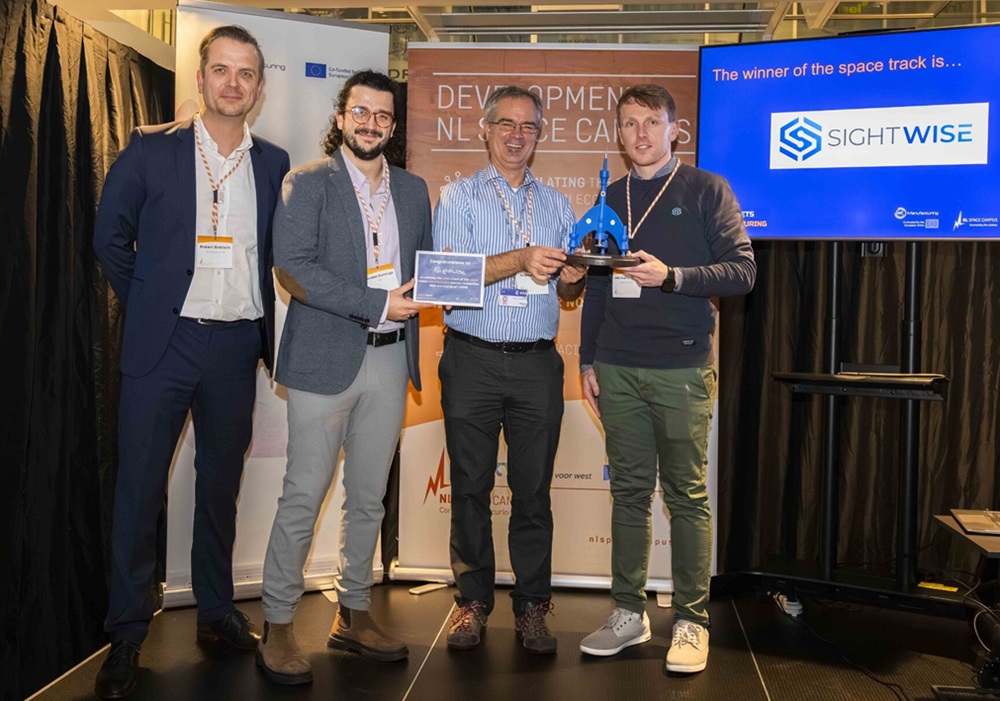
Prize: The winner of the space track was selected for its synthetic-data-driven machine vision solution that enhances inspection quality and accelerates AI training. The startup’s technology reduces risk, improves reliability and supports advanced automation both on Earth and in orbit. The team will receive business development support from SBIC Noordwijk and NL Space Campus, access to the SBIC partner network and space events, as well as visibility in international space media.
“We were delighted to take part in this event and to exchange ideas on how the space industry can move toward a higher level of automation. Our approach was to transfer proven automation concepts from aviation to the space industry and place this cross-industry knowledge at the centre of our pitch,” Nils Gutsche, COO of Sightwise, commented on being awarded the top prize for the space track. “As a young and innovative company, we are constantly looking for new opportunities where automation can create real value. The space industry is growing rapidly and facing increasing complexity in manufacturing and inspection processes. We see strong potential for automation in this field and are excited about contributing actively to its development.”

MANUFACTURING TRACK
Winner: Uncharted AI (uncharted-ai.com)
Solution: Proposed for challenge #5 (from Technoport/ESRIC)
About: The company is leveraging advanced AI and digital mapping or computer vision to address complex challenges in navigation, anomaly detection or autonomous exploration.
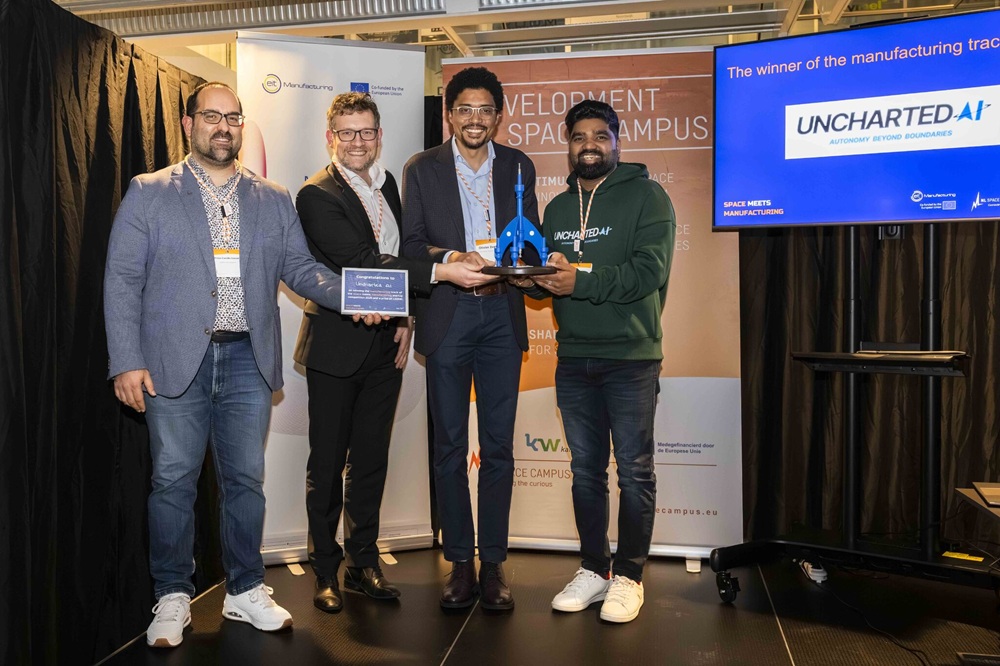
Prize: The winner of the manufacturing track was selected for its AI-powered autonomous robotic systems for exploration and mapping in extreme, GPS-denied environments. The startup’s technology unlocks new functionalities for industrial sites and creates opportunities for future space missions. To expand the reach and internationalisation goals, the team received the EIT Manufacturing support package, including enhanced visibility across the EIT Manufacturing partner network and participation in key manufacturing events.
Looking ahead
The Space Meets Manufacturing startup competition demonstrates what becomes possible when Europe’s ecosystems collaborate. By supporting startups, connecting networks and providing platforms for cross-sector innovation, the initiative strengthens Europe’s strategic position at the intersection of advanced manufacturing and space technology.
This is an edited version of the original news item on the EIT Manufacturing website.
▶️Get updates about future editions of the competition via the SBIC Noordwijk newsletter.